🔹 Pillar 3: Omega 6 and Omega 3 Imbalace?
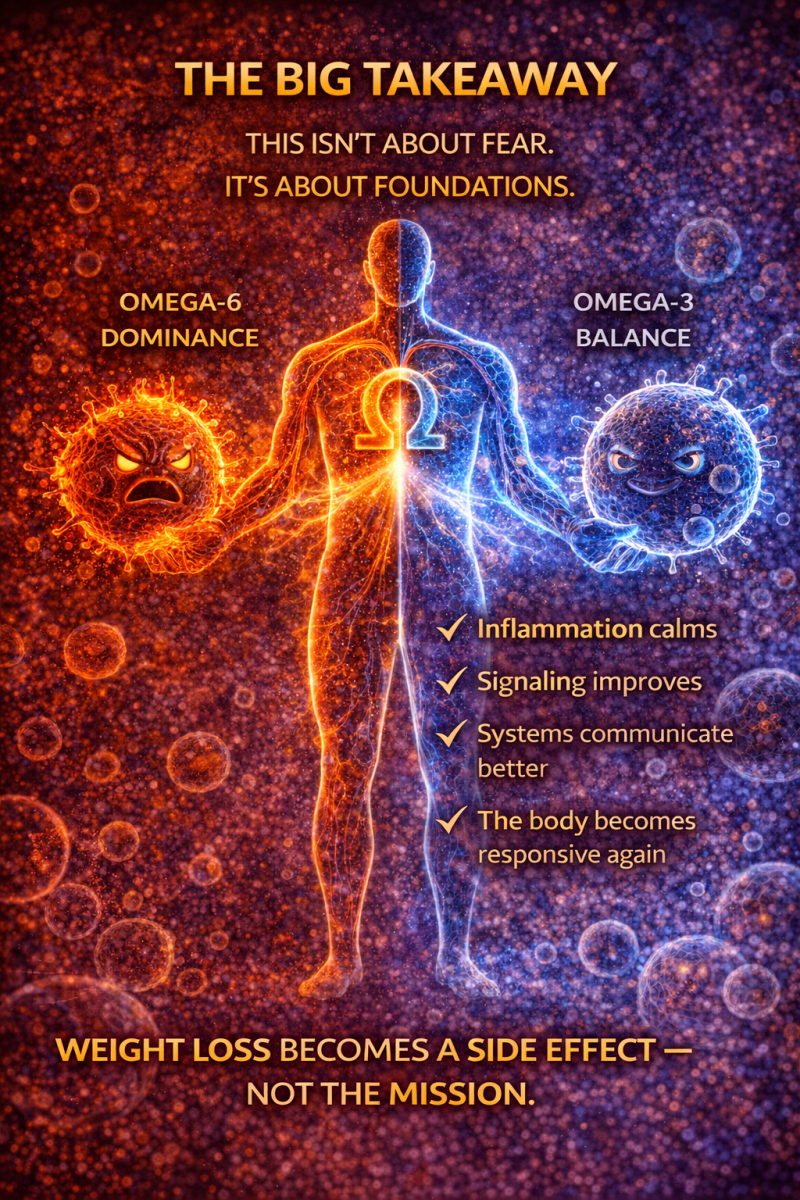
Omega-3 and omega-6 fatty acids are essential fats.
Your body cannot make them — they must come from your diet.
Both are necessary.
But balance is the key.
Modern diets didn’t just increase omega-6 intake — they overwhelmed omega-3. This imbalance quietly affects how cells communicate, respond, and heal.
The Modern Omega Imbalance Problem
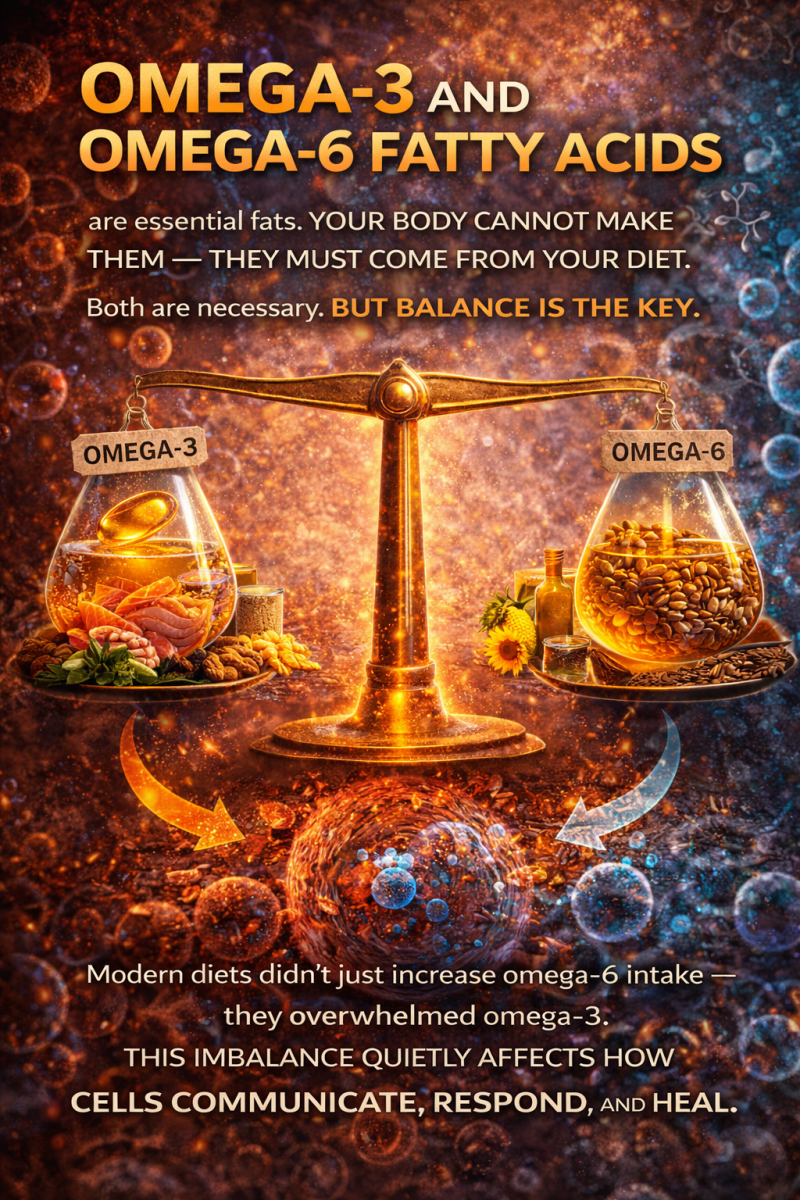
Historically, humans consumed omega-6 and omega-3 fats in a ratio close to 1:1 to 3:1.
Today, many people live at ratios of:
-
15:1
-
25:1
-
40:1
-
even 70:1+
This imbalance doesn’t cause disease overnight — it creates the environment where dysfunction thrives.
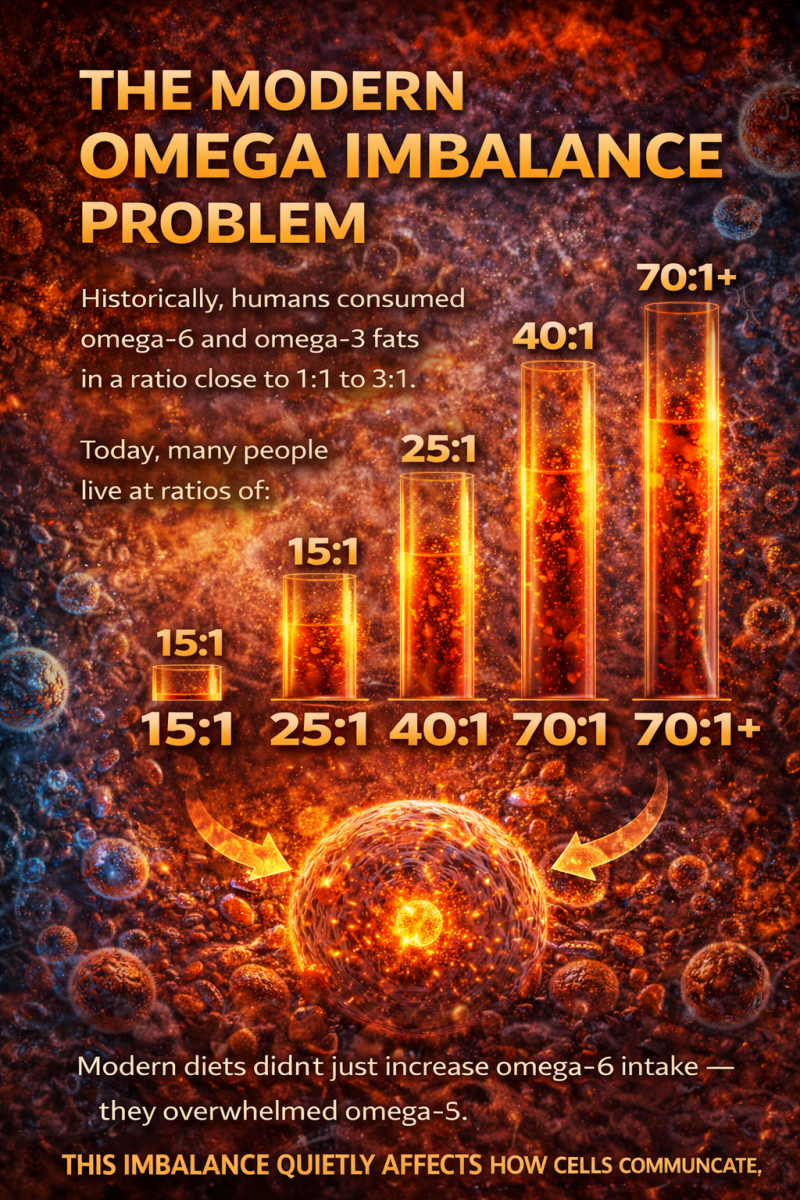
Every cell in your body is wrapped in a fat-based membrane.
That membrane:
-
Controls what enters and exits the cell
-
Regulates hormone signaling
-
Determines how the cell responds to insulin
-
Influences inflammation levels
-
Affects energy production and repair
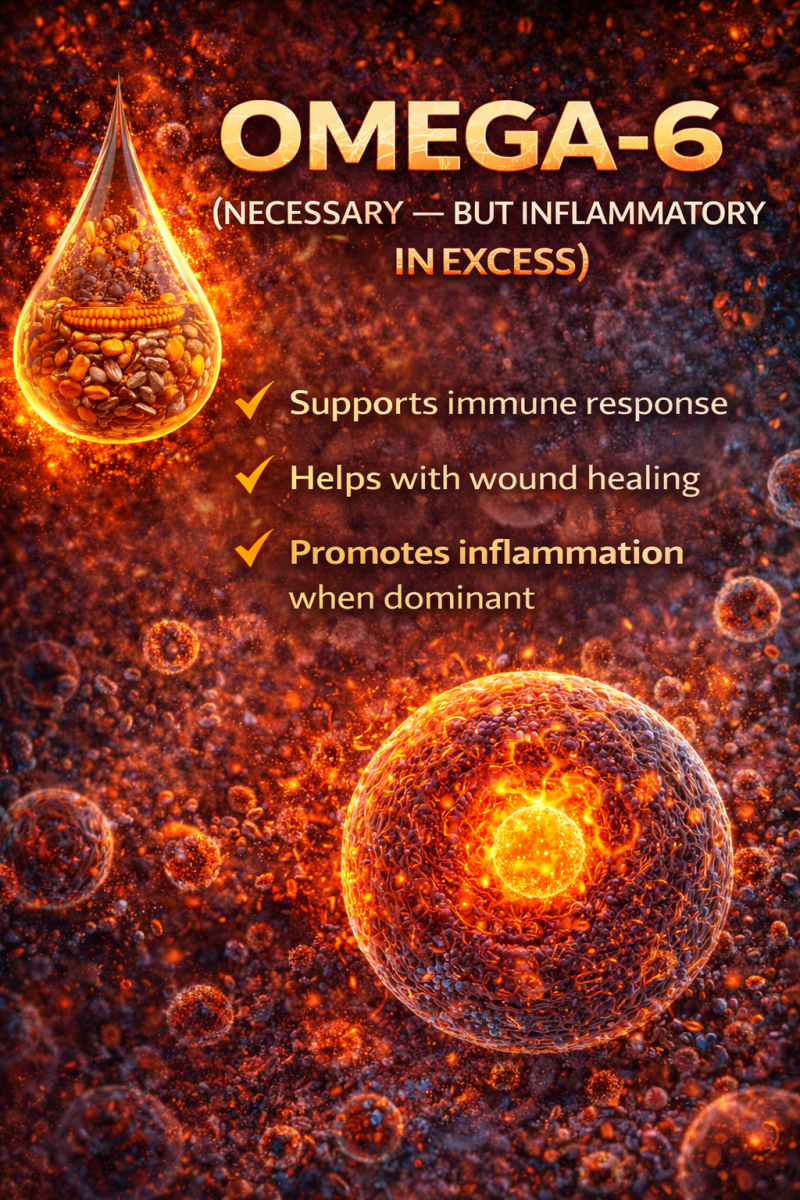
Omega-6 (Necessary — but inflammatory in excess)
-
Supports immune response
-
Helps with wound healing
-
Promotes inflammation when dominant
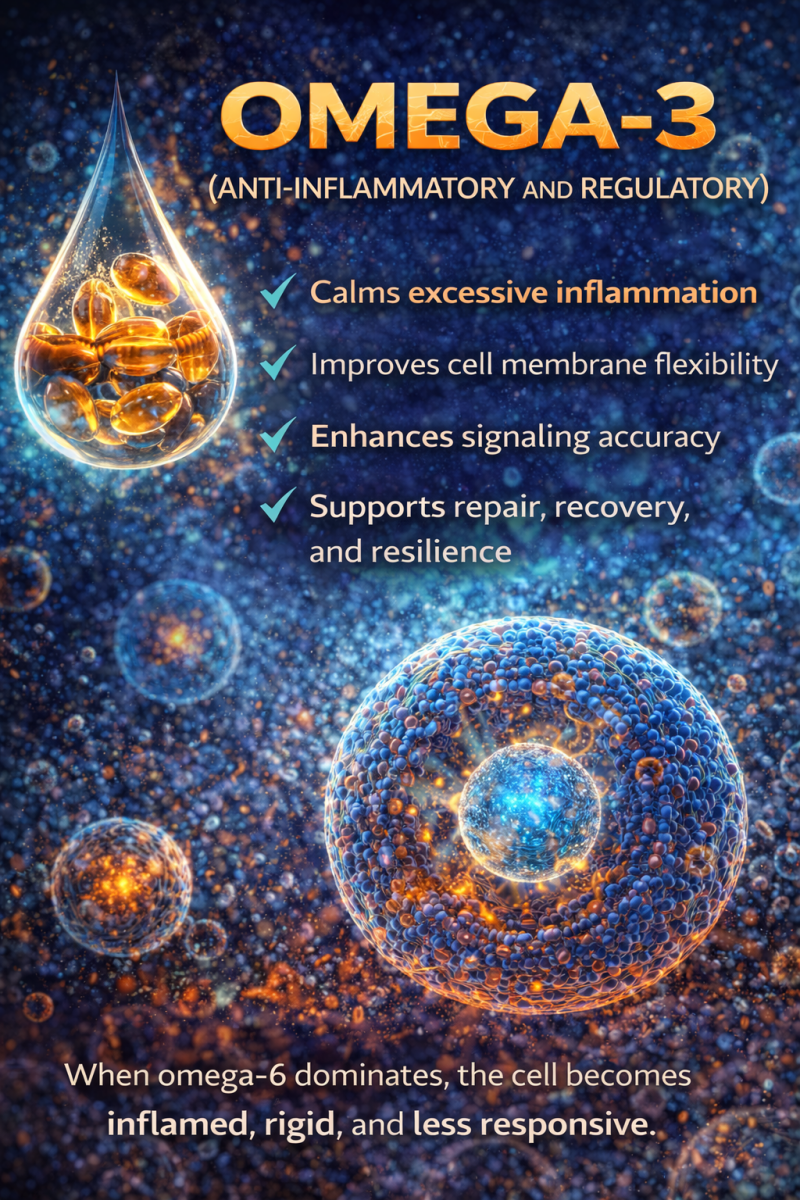
Omega-3 (Anti-inflammatory and regulatory)
-
Calms excessive inflammation
-
Improves cell membrane flexibility
-
Enhances signaling accuracy
-
Supports repair, recovery, and resilience
When omega-6 dominates, the cell becomes inflamed, rigid, and less responsive.
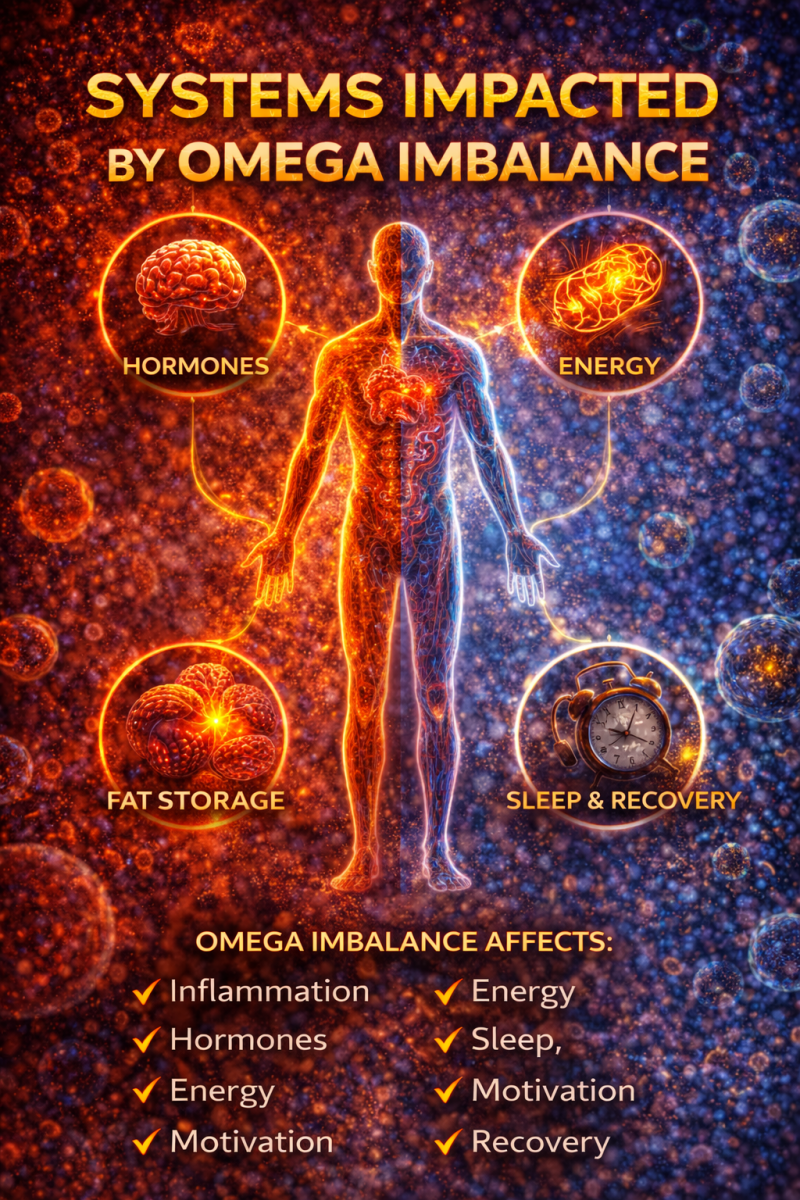
Systems Impacted by Omega Imbalance
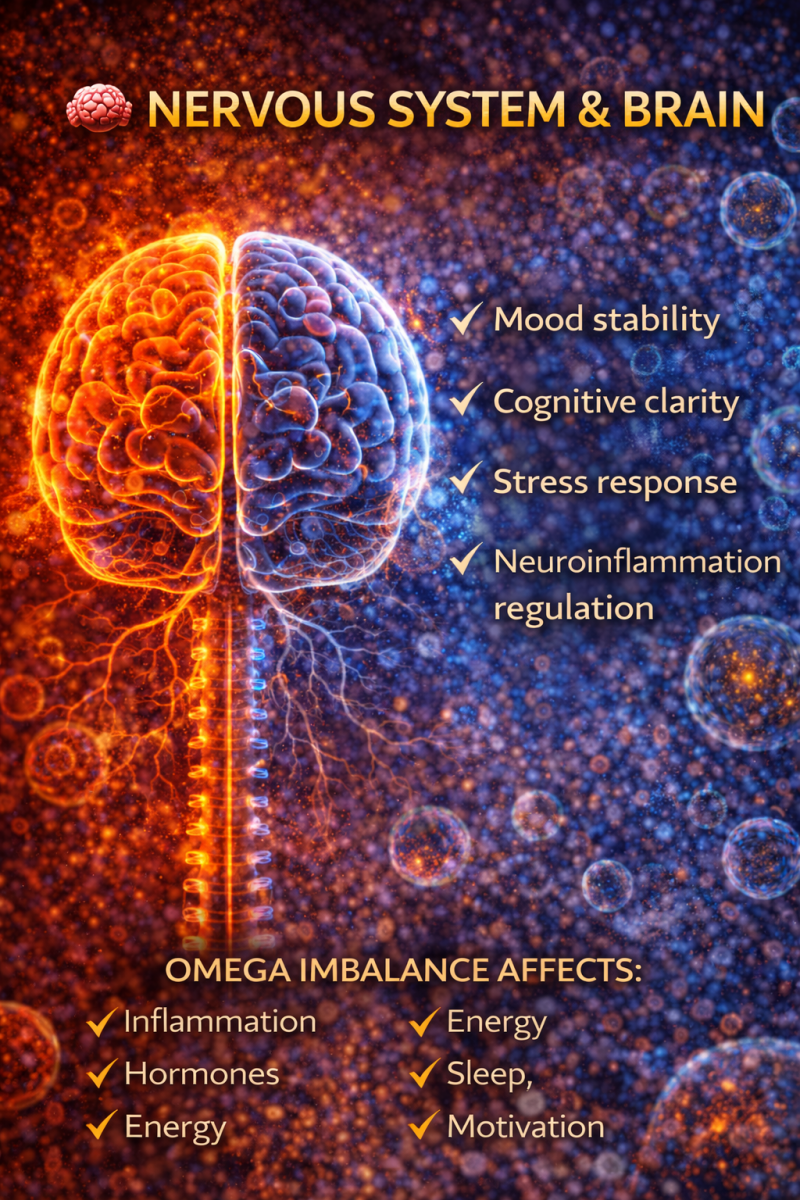
🧠 Nervous System & Brain
-
Mood stability
-
Cognitive clarity
-
Stress response
-
Neuroinflammation regulation
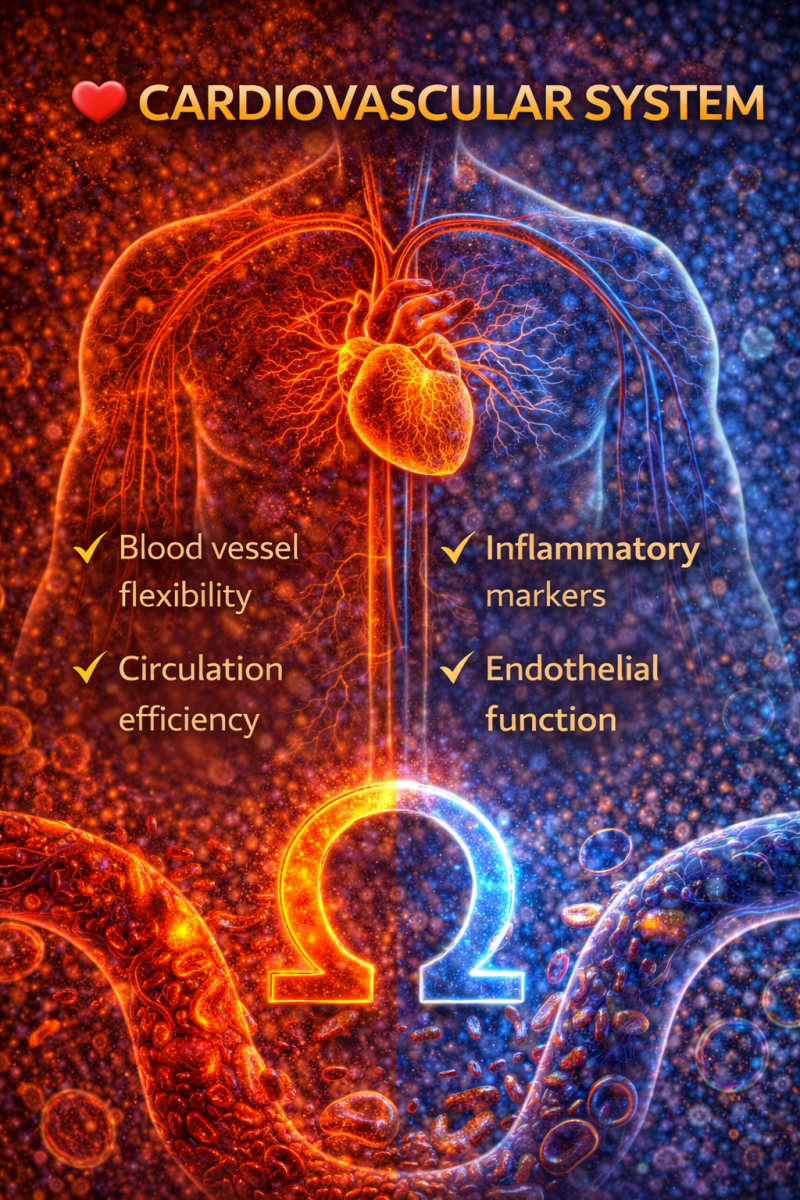
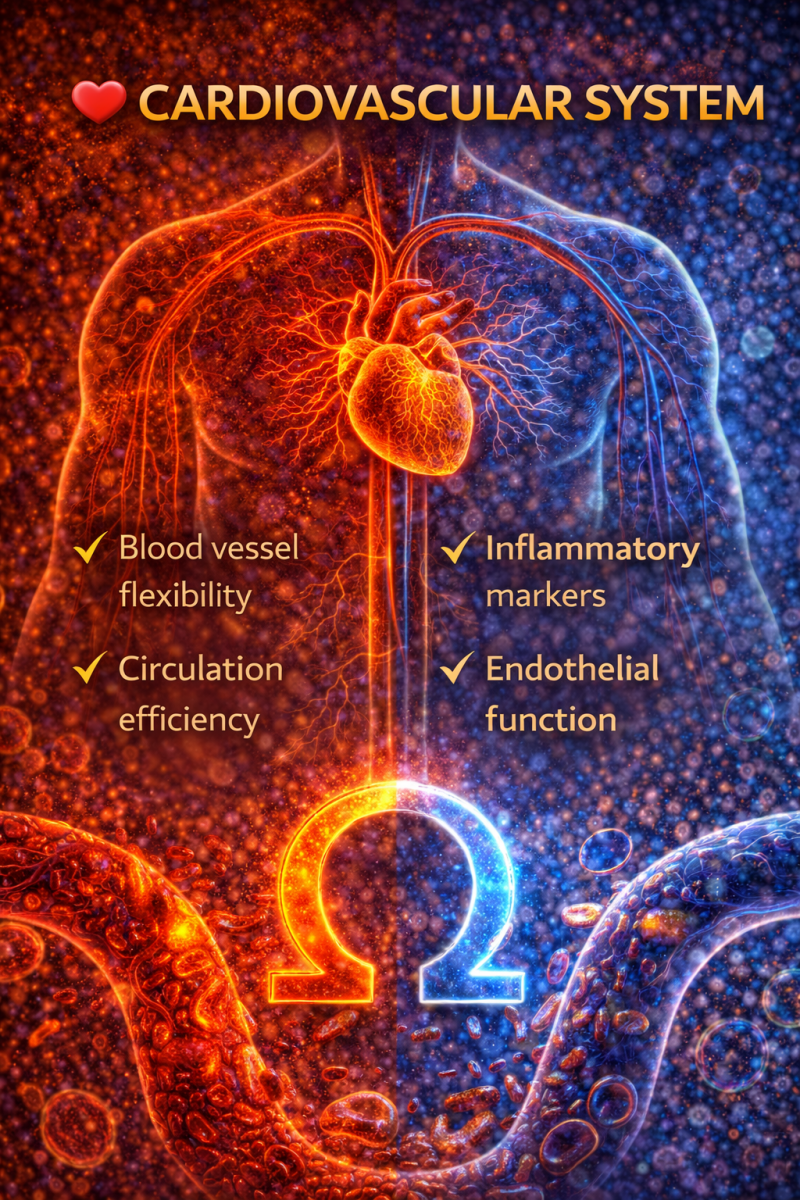
❤️ Cardiovascular System
-
Blood vessel flexibility
-
Circulation efficiency
-
Inflammatory markers
-
Endothelial function
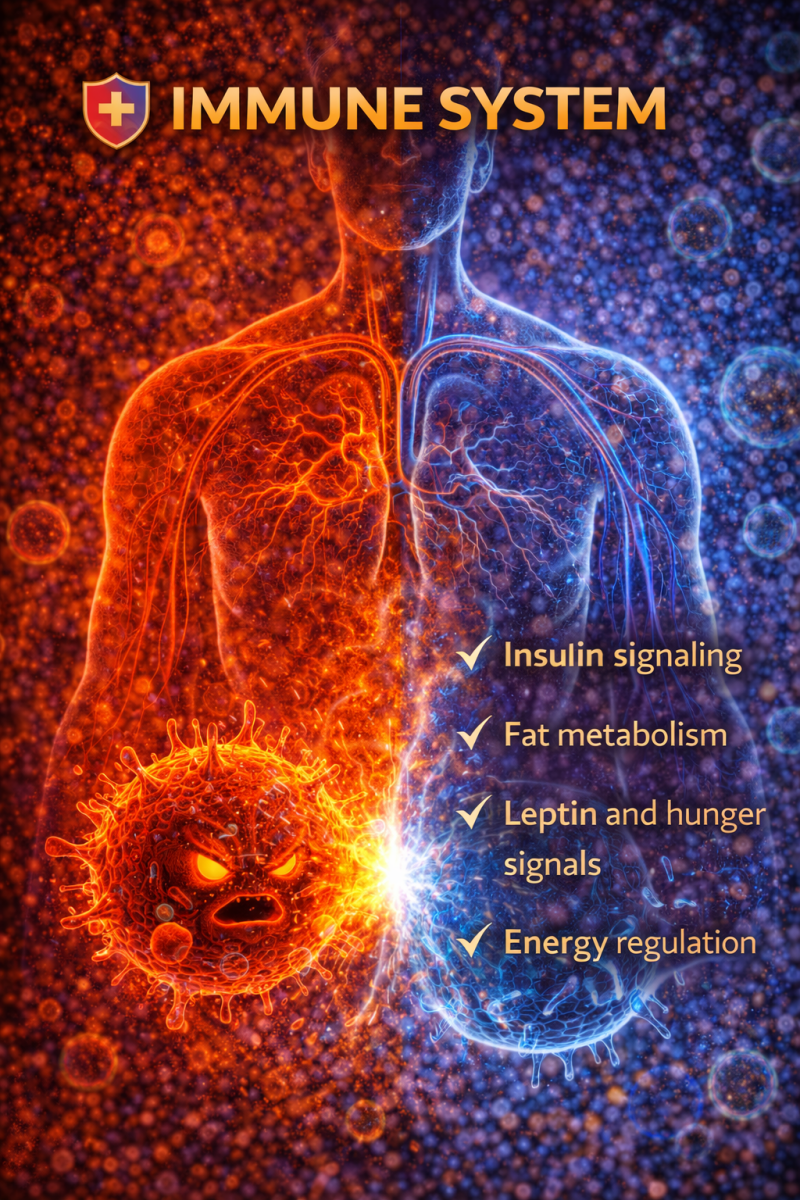
🧬 Metabolic & Hormonal System
-
Insulin signaling
-
Fat metabolism
-
Leptin and hunger signals
-
Energy regulation
🛡️ Immune System
-
Autoimmune activity
-
Immune overreaction
-
Chronic inflammatory signaling
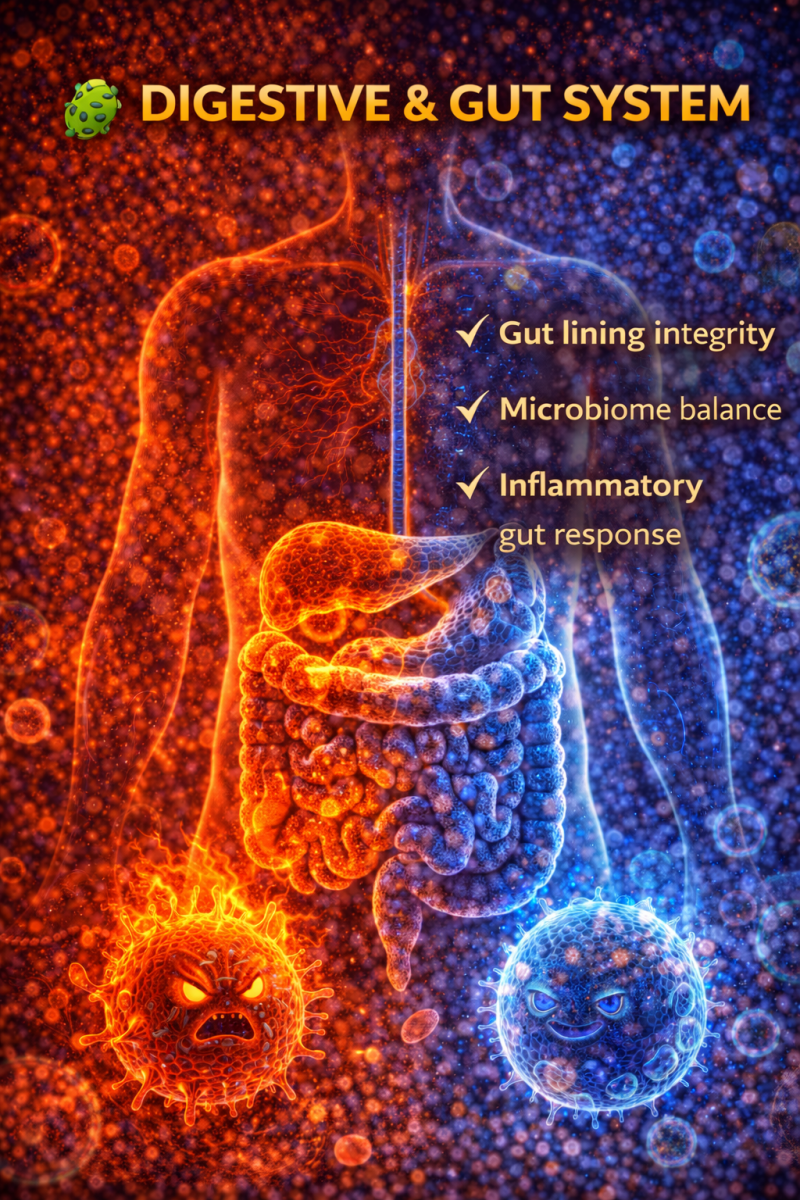
🦠 Digestive & Gut System
-
Gut lining integrity
-
Microbiome balance
-
Inflammatory gut response
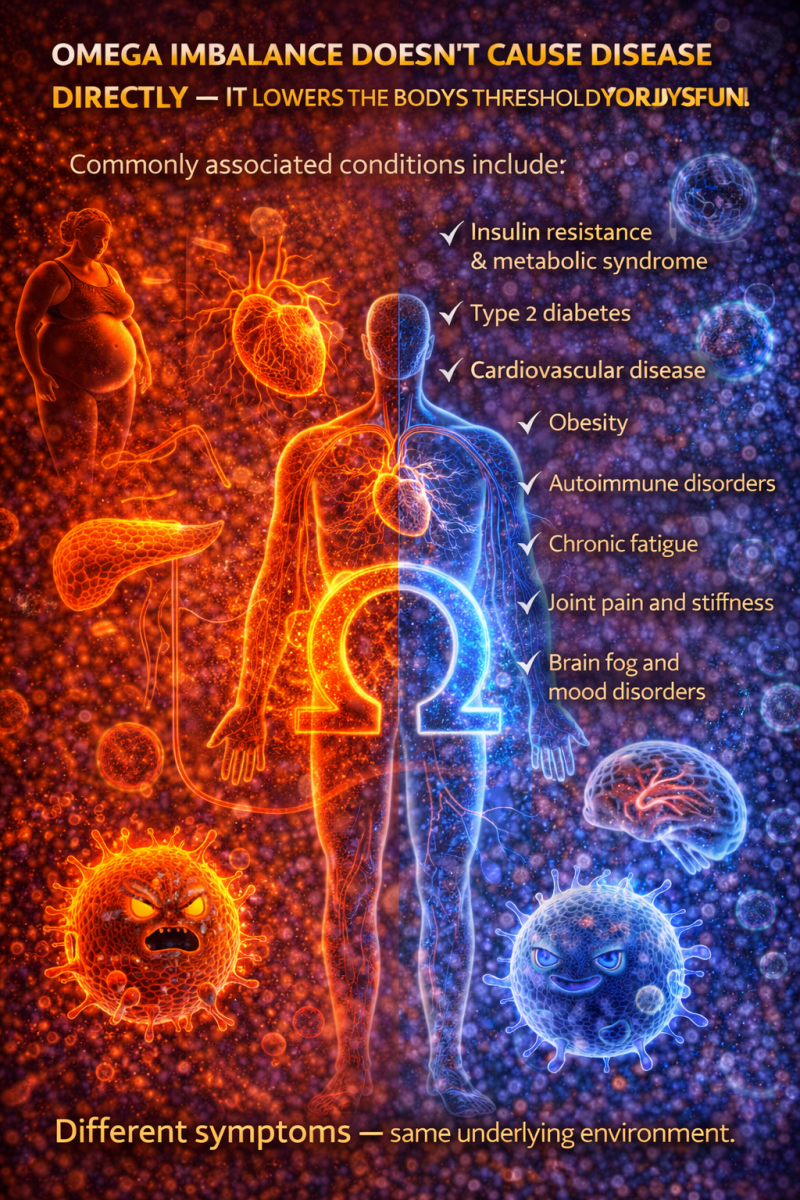
Omega imbalance doesn’t cause disease directly — it lowers the body’s threshold for dysfunction.
Commonly associated conditions include:
-
Insulin resistance & metabolic syndrome
-
Type 2 diabetes
-
Cardiovascular disease
-
Obesity
-
Autoimmune disorders
-
Chronic fatigue
-
Joint pain and stiffness
-
Brain fog and mood disorders
Different symptoms — same underlying environment.
Why “Calories” and “Weight Loss” Miss the Point
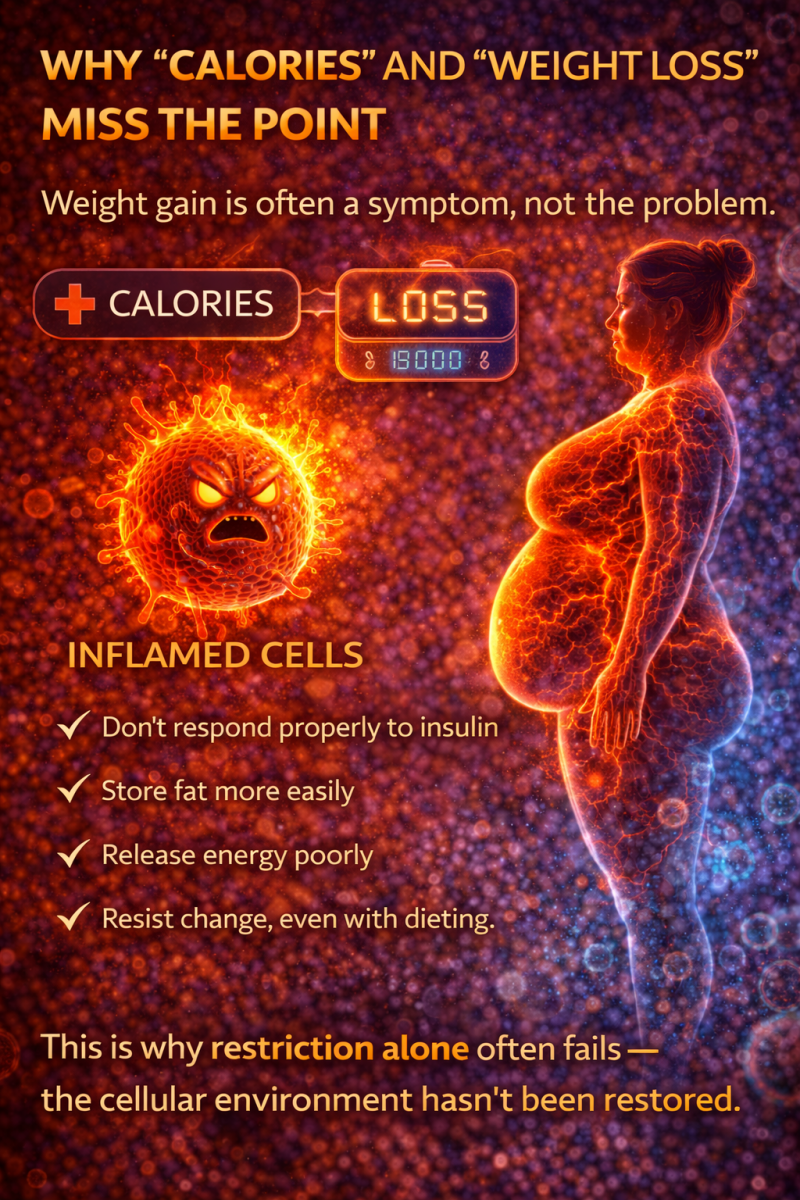
Weight gain is often a symptom, not the problem.
Inflamed cells:
-
Don’t respond properly to insulin
-
Store fat more easily
-
Release energy poorly
-
Resist change, even with dieting
This is why restriction alone often fails — the cellular environment hasn’t been restored.
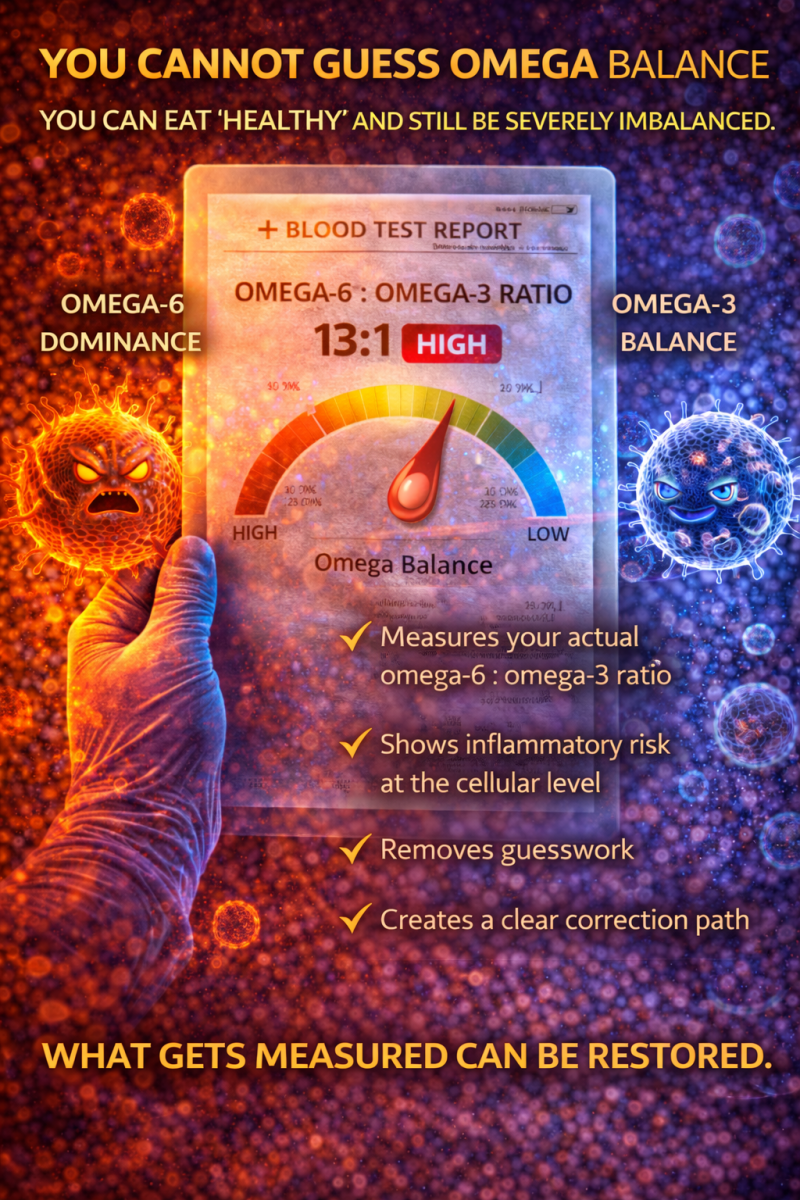
You cannot guess omega balance.
You can eat “healthy” and still be severely imbalanced.
Testing:
-
Measures your actual omega-6 : omega-3 ratio
-
Shows inflammatory risk at the cellular level
-
Removes guesswork
-
Creates a clear correction path
What gets measured can be restored.
The Big Takeaway
This isn’t about fear.
It’s about foundations.
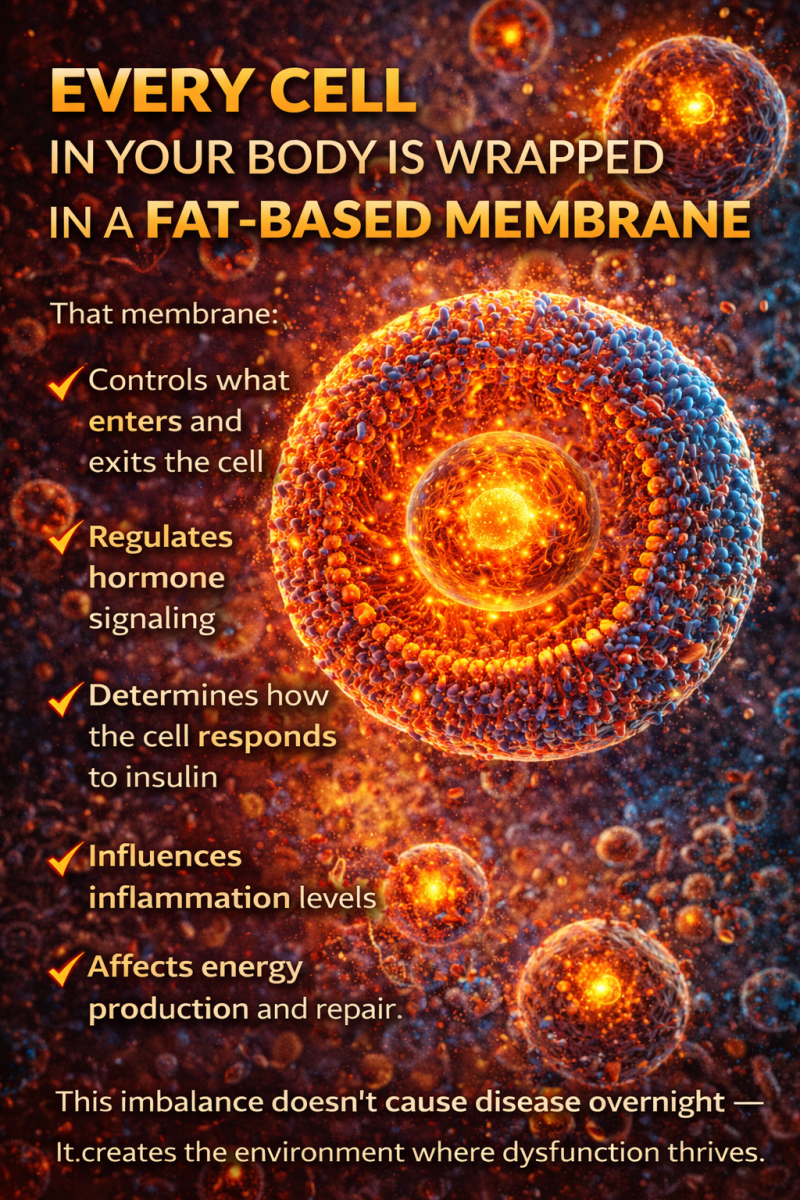
When cellular fat balance improves:
-
Inflammation calms
-
Signaling improves
-
Systems communicate better
-
The body becomes responsive again
Weight loss becomes a side effect — not the mission.